Additional Insights for Myth 9
To make decisions, think in order to act
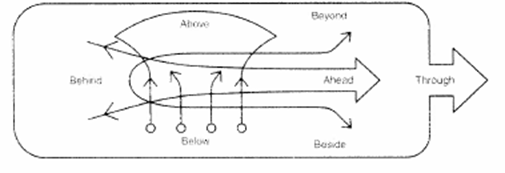
Seeing every which way
(Adapted from mintzberg.org/blog, 14 September 2018. An early vision of this appeared in J. Nasi, ed., Arenas of Strategic Thinking, Foundation for Economic Education, Helsinki Finland, 1991.)
Maybe we think too much and see too narrowly.
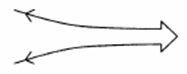
Most people believe in seeing ahead.

But we can’t see ahead unless we see behind, because any good vision of the future has to be rooted in an understanding of the past.
It is commonly claimed that seeing strategically is about “distinguishing the forest from the trees,” in other words seeing above.
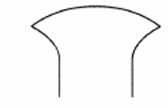
But can anyone get the “big picture” just by seeing above. From a helicopter, the forest looks like a green carpet, yet anyone who has taken a walk in a forest knows that it doesn’t look like that on the ground. Strategists who stay in helicopters, like managers who stay in their offices, can be blind to the need of their organization.
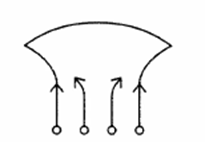
How about the metaphor of finding a diamond in the rough: seeing the gem of an idea that can change an organization. And that does not come from the big picture so much as from a lot of hard digging on the ground. Indeed, there is no big picture for the taking: it must be painted by brushstrokes, one at a time. Thus, seeing above must be inferred from seeing below.
Yet you can see ahead by seeing behind, and see above by seeing below, and still not be a visionary. That takes creativity—seeing differently from other people, to challenge the conventional wisdom—and thereby differentiate the organization. Such thinking has been referred to as lateral thinking, here we can call it seeing beside.
There can, however, be more creative ideas in the world than we can handle—just visit a museum. And so, we need to do more than seeing beside. Those creative ideas have to be seen in context, in a world that is unfolding. Hence, visionaries also need to see beyond, but in a sense different from seeing ahead: they need to foresee a world that, but for them, would not otherwise exist.
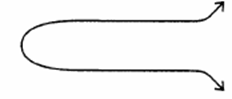
But our seeing is not finished yet, because there remains one last necessary ingredient. What’s the use of doing all this seeing—ahead and behind, above and below, beside and beyond—if nothing gets done? Hence we, must also see it through.
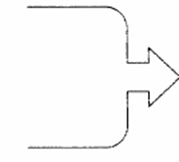
See all this together and you get a full picture of seeing.