From organizational boundaries to outward bound
(Adapted from Understanding organizations…finally, Chapter 201)
The term “outward bound” was originally used to describe ships departing their home port for foreign destinations. Later, it came to be associated with an NGO that provides youth with adventures in nature. This Insight proposes a third use, for the opening up of the borders of organizations.
Note that “bound” can have two quite opposite meanings. One, as used above in “outward bound,” has the sense of opening up, to go somewhere else. The other has the sense of closing in, being bounded, “restricted to or by a place or situation” (Oxford English Dictionary).[i]
Not long ago, organizations were seen as maintaining rather firm boundaries with the outside world. Typically, activities were either inside or outside: there was not middle ground. This was exemplified by the popular strategies of vertical integration and diversification: as corporations grew large and extended their operating chains, or else ventured into new businesses, their new activities were seen as functioning totally within their existing borders. Then came a rather sharp transition, as many organizations went outward bound, by opening up their borders with a variety of interesting and sometimes creative arrangements, here labelled networking out, contracting to outsource, partnering to venture jointly, establishing a platform for others, affiliating for common purpose, and associating for common concerns. We describe each in turn.
Bounded by Vertical Integration and Diversification
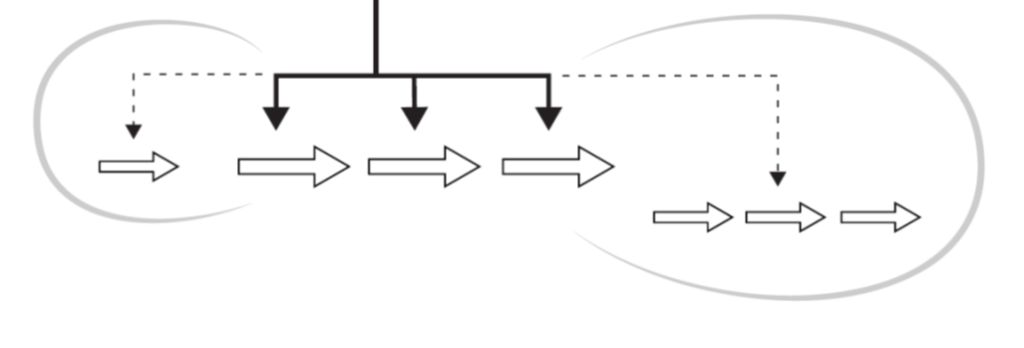
For much of the last century, the most prominent strategies of large corporations were called vertical integration and diversification, pursued within their established boundaries. Vertical integration extended their chain of operations, bringing within their borders suppliers at one end (“upstream” as shown in the figure) and customers at the other (“downstream”). An automobile company might have bought a supplier of its batteries, or created its own dealerships. Henry Ford pursued this strategy to an extreme: “To complete the vertical integration of his empire, he purchased a railroad, acquired control of 16 coal mines… even bought a glassworks.”[1] >>>>(4)
When a company diversified, to offer additional products or services, it bought companies in other businesses, incorporating them within its own borders, or else developed new businesses internally. Honda, for example, exploited its expertise in motors to produce a variety of other vehicles—outboard motors, lawnmowers, ATVs, and so on.
Networking Outward
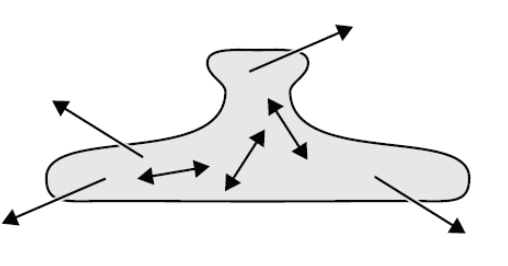
Networking is hardly new. Organizations have always done so to facilitate communication, externally as well as internally (both shown in the figure). What has changed in recent times, thanks to the new social media, is the extent and reach of external networking.Now, connecting with associates across the world can sometimes be easier than connecting with colleagues next door.
Networking need not be based on any formal structural arrangement; sometimes it just happens. In contrast, the other five arrangements of outward bound are somewhat formally structured, two making use of contracts, another of rules, the last two of designated memberships.
Contracting to Outsource

An organization’s boundaries begin to blur when it engages in outsourcing—the opposite of vertically integrating—as some activities previously done in-house are contracted to outside organizations or individuals. Many companies these days, for example, engage specialized consulting firms to search for new executives.The suppliers of these services are not in the organization, but not quite out of it either: they may, for example, supply it on a regular basis, under contract.
Some outsourcing has been around for a long time: organizations have always bought some services on contract—legal expertise, for example. And contractors in the construction industry have long used an extensive form of outsourcing. As their name indicates, they secure the contract to construct a building, and then subcontract the activities—electrical, plumbing, scaffolding, and so on—to a host of specialized companies.
This has spread more recently to many other industries, partly to counter the Henry Ford-style excesses of veridical integration. Now, however, the pendulum can sometimes swing the other way. It is one thing for a retailer to contract out the maintenance of its stores, quite another to let go of, say, the sourcing of its merchandise, as Amazon seems to be doing at this writing. Key here is to figure out what are the core competencies2 of the organization—those it cannot let go without ceasing to be a viable enterprise. In those construction companies, for example, this would seem to be the securing of contracts and the choice of subcontractors.
Outsourcing has, of course, hardly been restricted to business. Some years ago, our own university put many of its administrative staff on contract, which may have weakened its culture. And outsourcing has long been prominent in government, if not by that name. With so many public services to provide, governments have always made considerable use of outside suppliers. In fact, many NGOs came into being to supply certain public services on contract, such as programs to feed the poor. But this too can be carried to excess, as perhaps in the outsourcing of prison services to private companies in some American states.
Partnering to Venture Jointly
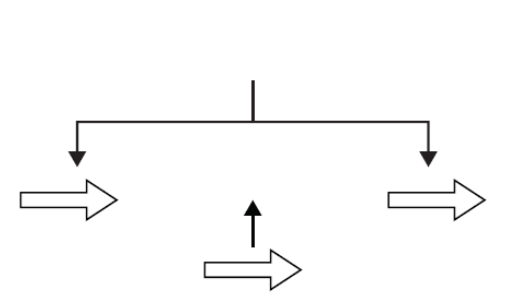
Here the borders blur further, as separate organizations partner to design, develop, and/or market particular products and services. They venture jointly, the implication being that the relationship is temporary.
The Smart Car has been an interesting example in the automobile industry, a joint venture of Mercedes and Swatch, the watch company. And the vaccine breakthrough in the COVID pandemic came from a joint venture of Pfizer with the husband and wife team of a small company.
The label joint venture may be used mainly in business, but the label PPP (public-private partnership) is commonly used for such ventures across sectors. In fact, many that go by this label are actually public-plural partnerships—that is, governments partnering with community associations in the plural sector3. And not uncommon are public-plural-private partnerships (which could be called PPPPs), as when local government, environmental NGOs, and private companies combine their efforts to reduce pollution in their city.
Offering a Platform for Others
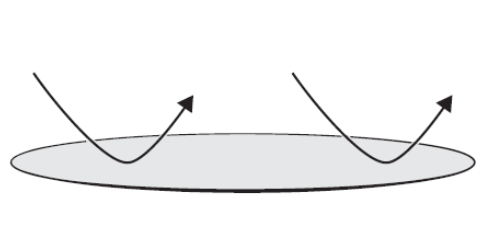
The opposite of outsourcing is a kind of insourcing: an organization sets itself up as a platform, available for use by outsiders. This is how we have used Wikipedia, an archetypical example of the platform organization, likewise ChatGPT, also software designers have been able to use Open-source Software. To use from a description in Wikipedia, “the copyright holder grants users the right to use, study, change, and distribute the software and a source code to anyone and for any purpose.”
Hence, we have been able to use Wikipedia freely, without even being members (it has no members). We are thus not inside Wikipedia, nor are we outside of it: we can enter whenever we wish, and not only to peruse we can edit entries, so long as we respect the rules. On the more commercial side, the Apple iPhone was created as a platform on which all kinds of organizations can offer their apps.
Just as a character in a Molière play discovered that he was speaking prose, so too are we discovering that we have been using platforms for many years. Consider those physicians who have used hospitals as places to practice their profession.
Affiliating for Common Function

Affiliating can be described as inserving (in contrast to outsourcing): a group of organizations, or individuals, get together to provide themselves with a common function as, for example, when businesses in a city—hotels, restaurants, theatres, together with the local chamber of commerce—affiliate to promote local tourism.
Affiliating is similar to creating a platform, except that here the users do this for themselves. For example, some hospitals collaborate to negotiate with suppliers for better prices. They affiliate, but they don’t integrate, since each member maintains its independence. The figure for this arrangement depicts it in the form of a donut, with the substance in the ring, not at the center.
Associating for Common Concerns

Affiliating and Associating may appear to be similar, but the distinction is worth making. Associating is looser than contracting, venturing, platforming, and even affiliating, but it is still an outward bound arrangement. Here, organizations associate for common concerns, rather than affiliating for a specific function.The figure depicts the associates sitting around a table, where they meet periodically to discuss interests they share in common. In diplomacy, for example, the G7 and G20 are associations, whereas NATO is an affiliation, with a military function.
Popular terms, such as consortium, chamber, alliance, and assembly, describe these associations, although these terms are sometimes used for affiliations as well. Do the trade associations in industries, or the chambers of commerce in cities, exist to discuss common concerns, or to lobby for common causes? Often, both. And when large competitors meet together, is this a simple association—”just to communicate”—or might it turn out to be an affiliation in the form of a cartel?
- Sources consulted for this article, listed together here because many do not fit neatly into one or other of these categories, include Lars Groth, Future Organizational Design; Filipe M. Santos and Kathleen M. Eisenhardt, “Organizational Boundaries and Theories of Organization,” Organization Science 16, no. 5 (September–October 2005); Göran Ahrne and Nils Brunsson, “Organizations and Meta-organizations,” Scandinavian Journal of Management 21, no. 4 (2005): 429–449.491–508; Henry Chesbrough, “Business Model Innovation: It’s Not Just About Technology Anymore,” Strategy & Leadership 35, no. 6 (November 2007): 12–17; M.D.L. Seidel and K. J. Stewart, “An Initial Description of the C-form,” Research in the Sociology of Organiza- tions 33 (November 2011): 37–72; Phanish Puranam, Oliver Alexy, and Markus Reitzig, “What’s ‘New’ about New Forms of Organizing?,” Academy of Management Review 39, no. 2 (2014): 162–180; Annabelle Gawer and Michael Cusumano, “Business Platforms,” in International Encyclopedia of the Social & Behavioral Sciences, 2nd ed. (Elsevier, 2015); Michael G., Jacobides, Carmelo Cennamo, and Annabelle Gawer, “Towards a Theory of Ecosystems,” Strategic Management Journal 39, no. 8 (May 2018): 2255–2276; and Andrew Shipilov and Annabelle Gawer, “Integrating Research on Interorganizational Networks and Ecosystems,” Academy of Management Annals 14 no. 1 (January 2020): 92–121. ↩︎
- C. K. Prahalad and Gary Hamel, “The Core Competence of the Corporation,” Harvard Business Review (May–June 1990) 79–91. ↩︎
- The plural sector is described in my book Rebalancing Society (Berrett-Koehler, 2015) ↩︎